Projeto KIDLINK
Programação
-
-
The Kidlink Project
Welcome to the Kidlink Project!
The Purpose of the Kidlink Project
“To promote a global dialogue among the youth of the world.”The Kidlink Project works to achieve its objectives/goals using free educational projects. The projects are created and developed through an international collaboration of volunteers and are offered to schools, organizations, and youth around the world for free.”
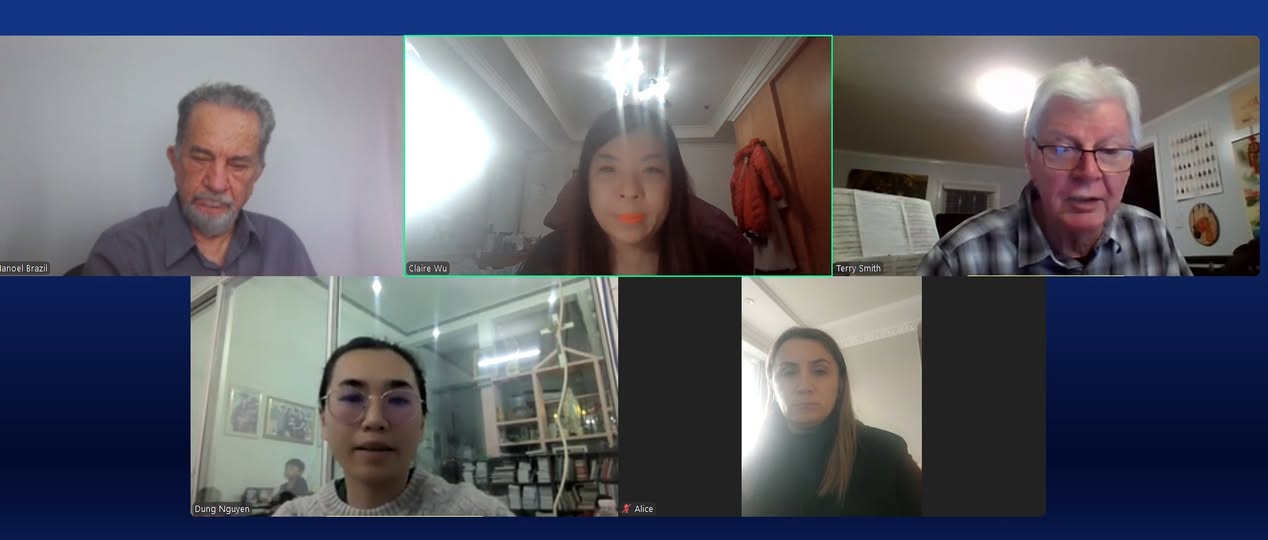
Kidlink Project Coordinators Meeting on January 18th
Collaborating in Kidlink Projects
This is described at:
www.kidlink.net/index.php/about-kidlink/working-with-kidlink/To participate in Kidlink Projects
To participate, please contact the manager of the project you are interested in and supply the required details about the teacher, school, location, age and number of students. We expect all teachers and students to follow the Kidlink Netiquette. This Netiquette explains the courteous expectations of participation by all users of Kidlink online spaces and projects.History of the Kidlink Project
The Kidlink Project was born in 1990 in Saltoy, Norway, during a cultural event, thanks to the collaboration of a group of teachers from different countries, and is based entirely on voluntary service. We are in the process of building new web pages to show the history of Kidlink.Online services
It is now hosted on a network with several sites and services such as Moodle (installation coming soon to this site), Facebook groups, Padlet, etc) that allow teachers and students to collaborate by providing a wide range of easy-to-use features and functions. The main goal of the Kidlink Project is helping children through the secondary school level, to be involved in a global dialog.Management
The Kidlink Project was previously managed by the non-profit KIDLINK ASSOCIATION originally registered in December 2008 in Goteborg, Sweden
and then registered in 2019, in Lipari, Italy.The Board
Kidlink Association previously had an international board that met regularly via the Internet. It is now managed by a Director (United States) and Co-Director (Armenia) with suggestions and guidance from Friends of Kidlink.To participate in Kidlink Projects
To participate, please contact the manager of the project you are interested in and supply the required details about the teacher, school, location, age and number of students. We expect all teachers and students to follow the Kidlink Netiquette. This Netiquette explains the courteous expectations of participation by all users of Kidlink online spaces and projects.
-
-
-
Landmark Game
Coordinator: Terry Smith
Landmark Game – Next session signup: January 2025
As a whole class or in small teams, students choose a culturally, historically, or geographically significant Landmark anywhere in the world, and research facts about its location. Next, they write nine challenging clues about the landmark. Over a 3-week period using email, teams try to decipher the clues, interact by questioning the other teams, and submit their final researched answers at the end of the project. Topics that are involved: geography/geospatial, history, literacy, math, science, art, and music. Student Competencies: Collaboration, Organization, Critical Thinking, Problem Solving, Technology Skills, and Global Awareness.
Note! The Facebook group is private, and open only for participating Landmark teachers, not for students. – https://www.facebook.com/groups/Landmarkproject
Go to the Project Site to sign up on the Google Form – teacher name, location, number of students.Landmark 2025 official signup begins on Jan17, but as always, early signups are fine. I have the main website ready and a signup Google form ready for your Team names and basic information. Will it be the Primary Group for you or the Challenge Group for your team?Weekly Clues will be posted:
Clues 1-2-3: Monday, February 3
Clues 4-5-6: Monday, February 10
Clues 7-8-9: Monday, February 17
All Answer sheets sent in by March 3.
Signup Google Form - https://forms.gle/mjpFdfjSGNsDkqHz9
-
-
-
FAST PLANTS Project
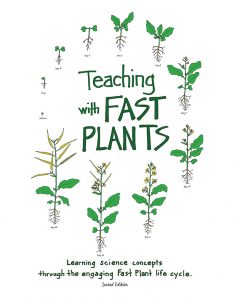
The registration is open
Project starts on April and/or September 2025
Coordinator: Manoel Araujo Filho from Brazil
e-mail: maf.ead@gmail.com
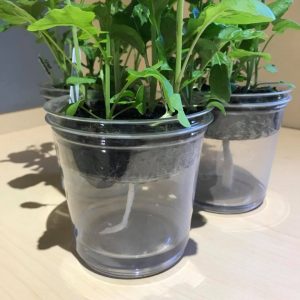
Google Form – https://forms.gle/vkFiAw5CDF4suCt77The “F A S T P L A N T” project is always developed with fast-growing vegetables that allow experiments to study biology in parallel with scientific methodology and research: planning of experiments and development of scientific attitudes: observation, collection, analysis and interpretation of data and writing of reports with the conclusions.
1- Instructions and conversations for planting seeds h
2- Sow the seeds
3- Start observations
4- Start the measurements
5- Start placing photos, videos and tables in the project’s MOODLE
6- Chats and Forums on MOODLE about plant development
7- Continue measurements and discussions
8- Talk about the development of plants: it grew, it did not grow, it gave flowers, it gave seeds, successes and problems observed
9- More Chats and Forums on MOODLE about plant development
10 – Write the reportsFAST PLANTS Next session signup: April and/or September 2025
Initial proposal
Observe the development of vegetables that will be planted the same day, in different locations, and promote the exchange of information resulting from these experiments. The students participate intensively in the project, from the planting of the vegetable, and with this, are stimulated to the careful observation of the development of all phases of these plants. This experiment leads students to understand aspects of plant physiology and genetics.They sow the same type of plant (Brassica Rapa), with fast cycle and in their studies periodically record the results of plant height, number of nodes, height of the first node, number of buds, number of flowers, room temperature at each moment will compare their results with those of other students, even from different locations and climates, reinforce the awareness of the universality of scientific knowledge and the need for cooperative work.
To participate each group of students must have a KIT with seeds, a common sowing, and provide lighting for the experiment period.
They sow the same type of plant (Brassica Rapa), with fast cycle and in their studies periodically record the results of plant height, number of nodes, height of the first node, number of buds, number of flowers, room temperature at each moment will compare their results with those of other students, even from different locations and climates, reinforce the awareness of the universality of scientific knowledge and the need for cooperative work.
Some educational objectives of the project:
-Study and understand basic concepts of Biology
-to stimulate interest in the study of genetics
-encouraging collaborative work and problem solving, interpretation and comparison of results
-working using communication tools such as Social Networks, Environment for ODL, and methodologies such as Inverted Classroom, among others.
-
-

Where Do I Live? Kidlink site
Description
The project uses 3 great questions to develop in your students a deeper knowledge of themselves and their goals.
1. Can you find me?
2. What are the living things where I live?
3. What are the places where I learn?Students and teachers will use the free online program called Wakelet to share the responses to the project questions. Wakelet Tutorial.
Phases/Timeline
Registration Deadline: Sept 10 through Sept 30
Start of the activities: October 5, 2024.
End of activities: December 10, 2024.To Participate:
- Teachers register to Kidlink Registration Page. This link goes to a Moodle page where you will click Create New Account. If you have already registered with Kidlink, you don’t need to do that again.
- Fill out the Application Google Form (Sign Up Link)
- Join our discussion page “Where do I Live” FaceBook group
Objectives
- To identify themselves in their own surrounding as well as part of a bigger environment.
- To collaborate with and learn from other students online
- To become creative and critical thinkers
- To develop a sense of inquiry and thirst for knowledge
- To learn from and celebrate our cultural diversity and learn about common issues
-
Student Activity
Question 1. Can you find me?
Everyone and every place is important in our global community.Discussion questions:
- Introduce your class or group to those who are participating in our program. Introduce your country, city/town or village.
- Introduce the culture, traditions and customs of your country. What nationalities live in your country?
- Tell about sightseeing in your country, city/town or village.
- Who are the famous heroes of your country?
Question 2. What are the living things where I live?
We have found each other on the map and have learned a little about the country, cities/towns or village where our friends live. And now let’s take a look around and see who and what live there! Which animals and plants are there in this country? Ask your online friends about their places. They are probably very interested to learn about your area.Discussion questions:
- How many people live in your country? What nationalities are there in your countries?
- How do people spend their free time in your country? What about teenagers?
- What animals are there in your country? What about plants? Are there endangered animals? How do you protect such kind of animals?
Question 3. What are the places where I learn?
We all learn different things and not all the same way. Tell us about places where you learn and how you learn. Discuss your life as a life-long learner no matter where it is.Discussion questions:
- Tell us about where and how you learn. Describe the place or your school.
- How do you feel about your school? Do you like it?
- How many lessons do you have every day? What subjects do you learn? How long is your school year? When does it start and finish?
- Are there any activities in your school than formal learning? What are they?
- What is your favourite subject?
- What do you do in your free time?
-
-
-
-
-
-
-
-
-
-
-